
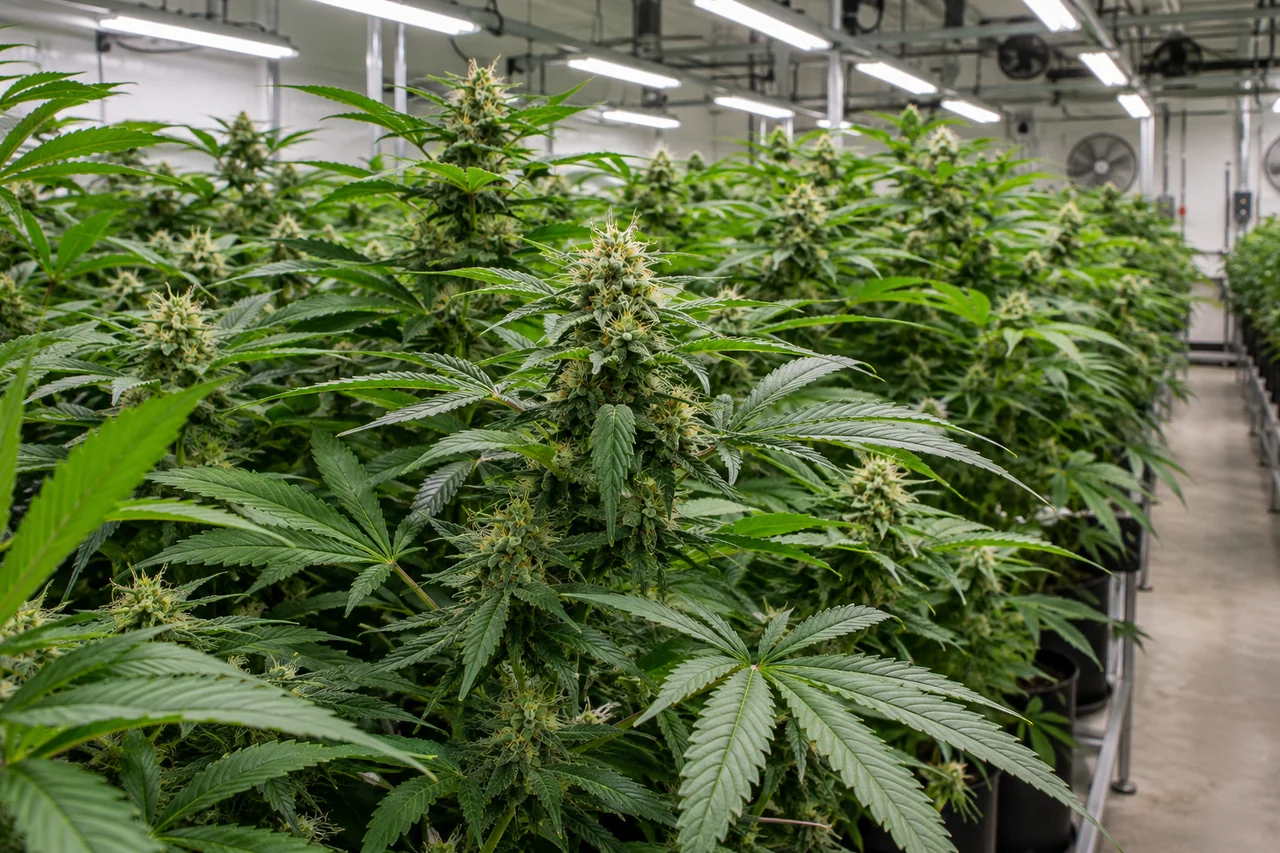
Start with the exact model variant and documented operating state. Then compare input power, light output, distribution and efficacy under matching test conditions. Mark missing information so you can see which conclusions the datasheet supports before buying.
Four metrics for four different questions
For a complete fixture, use electrical input power including the driver. Calculate photon efficacy by dividing PPF by input power at the same operating point. Compare values reported over the same wavelength band. The DLC specification cited below defines PPF over 400 to 700 nm.
| Metric | Unit | What the value describes |
|---|---|---|
| Input power | W | Electrical power drawn by the fixture in the stated operating condition. |
| PPF | µmol/s | Total photosynthetic photon flux emitted by the fixture in the defined band. |
| PPFD | µmol/(m²·s) | Photosynthetic photon flux density at a point on the measurement plane. |
| Photon efficacy (PPE) | µmol/J | Photosynthetic photon output per joule of electrical energy. |
Read a PPFD map
Check the distance from fixture to measurement plane, area, grid and operating setting first. Find out whether the surroundings were reflective and whether the map was measured or simulated. Compare distribution, including the edges, over equivalent areas and grids. A peak reading describes one point.
For measured maps, ask about sensor type, calibration and uncertainty. For simulations, ask for the light distribution data and assumptions about the surroundings. Record missing details as limitations in the comparison.
Compare two fictional datasheets
A and B are fictional examples. Both report complete input power and PPF over the same wavelength band at full output. A reports 100 W and 250 µmol/s, while B reports 120 W and 288 µmol/s. That gives 2.50 and 2.40 µmol/J respectively. A has higher efficacy in this example, and B has higher total flux.
A provides a map with a documented grid. B gives a peak reading without area or distance. The efficacy figures are comparable in this example. Distribution remains unresolved until B supplies a map under comparable conditions. Record that finding separately from price, warranty and compatibility.
Checklist for asking the supplier
For each field, record the value and its supporting document. Mark it as comparable, partly comparable or missing. For open questions, request documentation for the exact model variant.
- Model, revision, driver and documented input power.
- PPF, wavelength band, efficacy and corresponding operating state.
- PPFD map with area, distance, grid, surroundings and method.
- Test report, instructions, control compatibility, warranty and maintenance details.
Assess running costs and use in Switzerland
Use documented input power and your own electricity rate to estimate costs. Check the installation and safety documentation separately for the intended location. Take unresolved questions about connections, moisture and mounting to a qualified professional.
Datasheet review also matters when buying equipment for licensed medical cannabis production. Each operation assesses equipment suitability and quality, safety and authorization requirements separately.
Use your checklist to plan the next step
Keep your comparison checklist and update it when you receive the full documentation. You can register for CannabisClub for free. The grow shop is in preparation and equipment offers for members are planned.
Ready for the next step?
Register free at CannabisClub.ch. Exclusive equipment offers are in preparation.
Become a member for freeSources and transparency
- DesignLights Consortium: Technical Requirements for LED-Based Horticultural Lighting, version 4.0
- Illuminating Engineering Society: Horticultural Lighting Design and Déjà Vu
Sources reviewed on 7 November 2026. The numerical example illustrates how to interpret datasheets. The DLC specification is a technical reference.